
The crew planning your rooftop panels is ready to choose mounting locations. One question remains unanswered: what condition are the tiles, underlayment, and flashing beneath those locations in? Panels can be installed on an existing Los Angeles tile roof, but no one can promise that tiles will never crack or water will never get in. The roof’s condition, the attachment plan, and the way each penetration sheds water all matter—and they are easier to discuss before mounting locations are final.
A tile that looks sound from above does not tell the whole story. Tiles shed much of the weather, while the underlayment and details around penetrations and roof transitions also help keep water out. We would want to understand the roof’s age and repair history, look for damaged or displaced tiles, and assess accessible signs of underlayment or flashing deterioration. The likely attachment areas deserve particular attention because that is where the panel plan meets the existing roof.
An on-site assessment is what turns those concerns into a decision about your roof. It may show that limited tile or flashing work should happen first, or that the underlayment’s condition calls for a broader discussion before you cover part of the roof with panels. It may also identify concerns that need further investigation rather than a quick yes-or-no answer. We would not call a roof ready based only on how its tiles look from the ground.
Do the foreseeable roof work while access is straightforward
Schedule the roofing assessment before the installer locks in attachment locations or starts mounting. If a repair is needed where an array will sit, doing it first can avoid working around installed equipment. If the roof is approaching more substantial underlayment or flashing work, that decision matters even more: later repairs beneath panels may require arranging for their removal and reinstallation, adding work and coordination that might have been avoided.
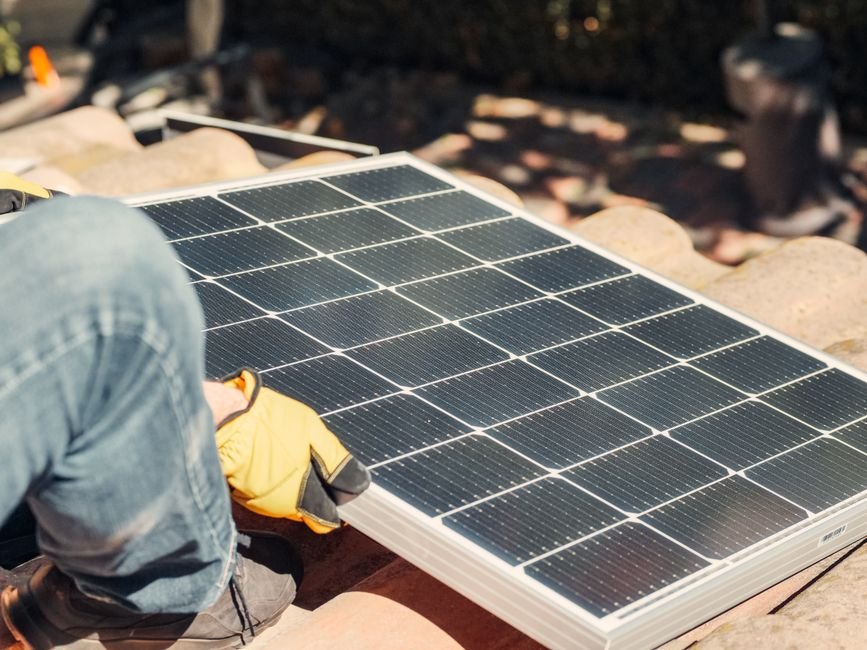
Not every worn tile calls for a major roofing project. The useful question is whether an identified issue is likely to affect the planned attachment area or become harder to address after panels go on. Ask us which concerns warrant attention before installation and which, if any, can reasonably be monitored. Then make the roofing decision before the two crews’ schedules depend on an unexamined assumption.
Make the roofing-to-installer handoff explicit
The roofing assessment and the mounting design answer different questions. Ask SOL Roofing what we can assess, address, and document about the existing tile roof; share relevant findings with your installer before its plan is final. If a proposed attachment area overlaps damaged tile, suspect underlayment, or a flashing concern, the installer needs to know before work begins—not after an attachment location has been chosen.
Have both crews clarify who will handle roof access and tile handling, how the planned attachments will integrate with the roof’s water-shedding details, and who will review any changed conditions discovered during installation. Do not assume one crew’s scope includes the other’s waterproofing work. Get the responsibilities clear for your particular roof and mounting plan.
Four questions to settle before mounting starts
- What roof concerns did the assessment identify, and which ones need work before panels go on?
- Where are attachments proposed, and do those locations overlap any areas of concern?
- What roofing work will be completed first, and what information will be shared with the installer?
- Who will confirm the attachment and water-shedding details, including how unexpected damage will be handled?
A broken tile and a water-entry path are not the same thing
A tile can crack during roof access without that alone proving water has entered the home. It still needs appropriate attention. A compromised attachment detail, flashing connection, or underlying water-shedding layer raises a different concern: a possible path for water into the roof assembly. Conversely, an unbroken visible tile does not guarantee the layers beneath it are sound. That is why neither a pre-installation assessment nor a carefully discussed mounting plan can guarantee a crack-free or leak-free result.
If you are planning panels for an existing tile roof in Los Angeles, ask SOL Roofing about assessing it before the installer finalizes mounting locations. Knowing what needs attention—and getting the relevant findings to the other crew—puts you in a better position to decide what roof work belongs before installation.


